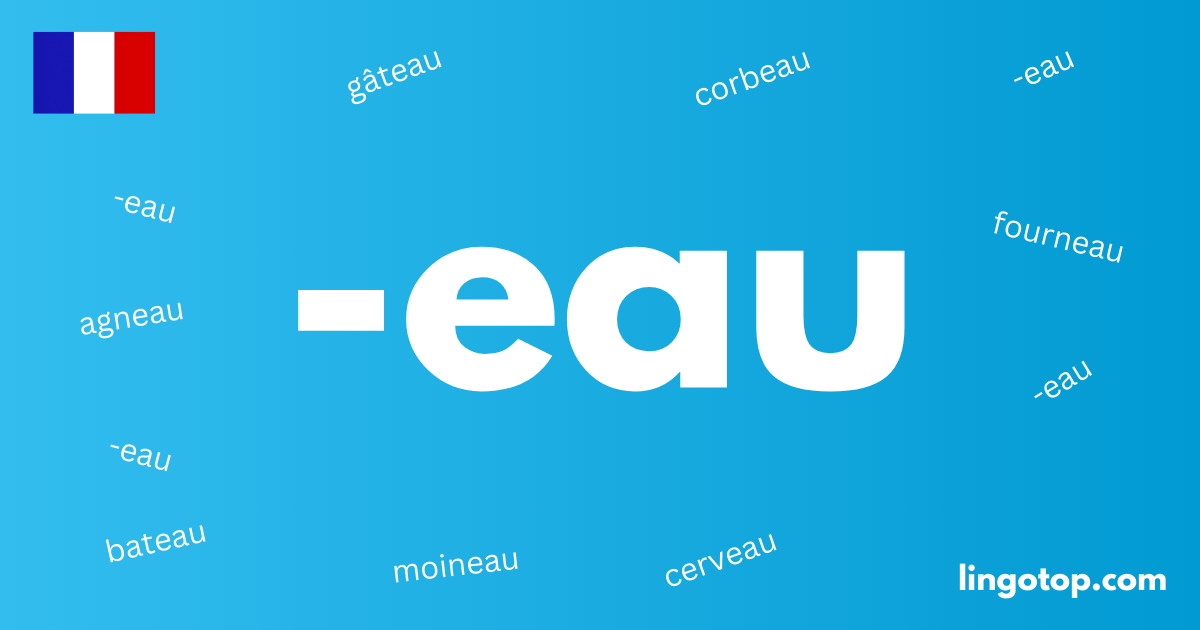
French Words Ending in -eau

List of French words that end in -eau

In French, many words end with the distinctive “-eau” suffix, adding a unique touch to the language’s vocabulary. This list highlights common French words ending in “-eau”, from everyday nouns to popular surnames, alongside example phrases to showcase how these words are used in context. Whether you’re exploring French for learning or curiosity, these words … Read more
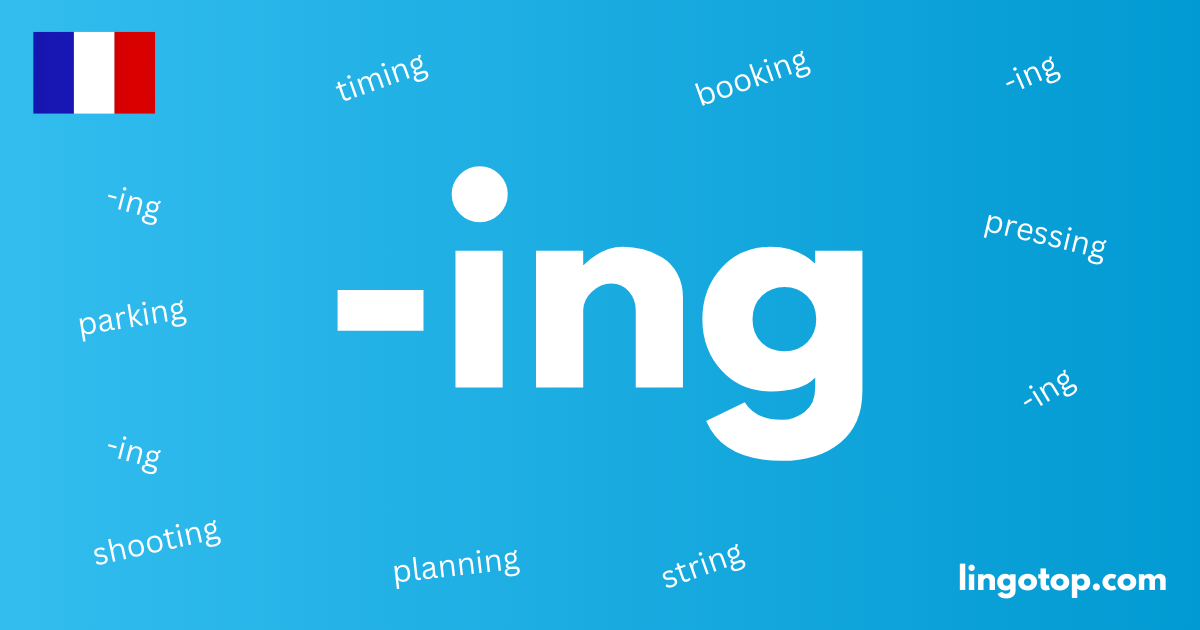
French Words Ending in -ing

French words that end in -ing normally comes from English

French has a unique collection of borrowed words ending in ‘-ing’, many of which retain their original English meaning or have developed specific nuances in French. These terms are commonly used in everyday conversation and can describe everything from leisure activities to household items. Below, we explore some of the most widely used ‘-ing’ words … Read more

French Words to Describe Women

In French, many beautiful words can describe a woman’s personality, character, and charm. Each of these adjectives captures a unique quality, from kindness and courage to intelligence and creativity. Below, you’ll find a carefully selected list of words that celebrate the diverse and inspiring traits often attributed to women in French. Ambitieuse (ambitious) Elle est … Read more

French Words to Describe Hair

Hair is an essential part of personal expression, and in French, there is a rich vocabulary to describe various hairstyles, textures, and colors. From bouclés to raides, each term captures a unique aspect of hair that can add character and style to one’s appearance. This article offers a comprehensive list of French words for describing … Read more

French Words to Describe Art

In this article you will find a list of French words to describe art. In the end of the article you will also find a text example using some of the words from the list along with its translation. Abstrait (abstract) Cet artiste préfère un style abstrait (This artist prefers an abstract style) Acrylique (acrylic … Read more

French Words Describing Time

In this article you can learn the different French words for describing time in the present, past, and future. Whether planning for today, recalling events from last week, or looking forward to next month, these expressions will help you discuss time with ease in French. Words Describing the Present The following words are used to … Read more

French Words Describing nature

This article presents a curated list of French words that describes nature. Each term highlights a unique aspect of nature, providing a glimpse into the diverse and vibrant environment surrounding us. Baie (la baie) – bay: a coastal indentation often surrounded by land and forming a quiet water area Bois (les bois) – woods: a … Read more

“Le” ou “la” anniversaire (male or female) – What is correct?

This article explains the correct gender (male or female) for “anniversaire” and why, helping you use it accurately in both spoken and written French. L’anniversaire (le anniversaire) (correct) La anniversaire (incorrect) Understanding Gender for Nouns in French In French, each noun is assigned a gender-either masculine or feminine-which dictates the article used with it. While … Read more

“Le” ou “la photo” (male or female) – What is correct?

“le photo” or “la photo”? Understanding whether nouns are female or male in French will clarify which form is accurate. This article explains the correct gender for “photo” and why, helping you avoid a common error in French grammar. La photo (correct) Le photo (incorrect) Understanding Gender for Nouns in French In French, every noun … Read more

“Le” ou “la WiFi” (male or female) – What is correct?

“le WiFi” or “la WiFi”? Understanding whether tech-related terms are female or male in French will clarify which form is correct. This article explains the preferred gender for “WiFi” in French, helping you use it correctly in conversation and writing. Le WiFi (correct) La WiFi (incorrect) Understanding Gender for Technology Terms in French In French, … Read more

“Le” ou “la COVID” (male or female) – What is correct?

“le COVID” or “la COVID”? It’s essential to understand whether this term is female or male in French. This article clarifies the correct gender for “COVID” and why, helping you use it correctly in both spoken and written French. La COVID (correct) Le COVID (incorrect) Understanding Gender Assignment for “COVID” in French In French, every … Read more

” Le ou la formulaire” (male or female) – What is correct?

“le formulaire” or “la formulaire”? Knowing whether nouns are female or male in French grammar will clarify which form is accurate. This article explains the correct gender for “formulaire” and why, helping you avoid a common error in French. Le formulaire (correct) La formulaire (incorrect) Understanding Gender for Nouns in French In French, every noun … Read more

“Le” ou “la fin” (male or female) – What is correct?

“le fin“ and “la fin“? Knowing whether nouns are female or male in French grammar will clarify which form is accurate. This article explains the proper gender for “fin“ and why, helping you avoid a common mistake in French. La fin (correct) Le fin (incorrect) Understanding Gender for Nouns in French In French, every noun … Read more

“Le ou la France” (male or female) – What is correct?

“le France” or “la France”? Understanding whether the country name is female or male in French grammar will clarify which form is correct. This article explains the proper gender for “France” and why, ensuring you use it correctly in both spoken and written French. La France (correct) Le France (incorrect) Rule of thumb In French, … Read more

“Le” ou “la” problème (male or female) – What is correct?

“le problème” or “la problème”? Knowing the correct gender (male or female) of nouns in French grammar will clarify which form is accurate. This article explains the correct gender for “problème” and why, helping you avoid a common mistake in spoken and written French. Le problème (correct) La problème (incorrect) Understanding Gender for Nouns in … Read more

“Le ou la français” (male or female) – What is correct?

“le français” or “la français”? Understanding whether the term is male or female in in French grammar will clarify which form is correct. This article explains the proper gender for “français” in various contexts, helping you use it correctly in both spoken and written French. Le français (correct) La Français(e) (incorrect*) *There are exceptions – … Read more

“Le ou la vidéo” (male or female) – What is correct?

“le vidéo” or “la vidéo”? Understanding whether nouns are male or female in French will clarify which form is correct. This article explains the correct gender for “vidéo”, helping you use this term correctly in both spoken and written French. La vidéo (correct) Le vidéo (incorrect) Understanding Gender for Nouns in French In French, each … Read more

“Le ou la Nutella” (male or female) – What is correct?

“le Nutella” or “la Nutella”? Understanding whether nouns are male or female in French grammar will clarify which form is correct. This article explains the correct gender to use with “Nutella”, helping you avoid a common mistake in spoken and written French. Le Nutella (correct) La Nutella (incorrect) Understanding Gender Assignment to Brand Names In … Read more

“Il veut ou il veux” – What is correct?

“il veut” or “il veux”? Understanding French conjugation rules will clarify which form is correct. This article explains which option to use and why, helping you avoid common mistakes with verb conjugations in the present tense. Il veut (correct) Il veux (incorrect) Understanding Conjugation of “Vouloir” in the Present Tense In French, verbs are conjugated … Read more

“Ça t’as plu” ou “ça t’a plu” – What is correct?

“ça t’as plu” or “ça t’a plu”? The correct form depends on the proper usage of contractions in French grammar.This article clarifies which option is grammatically correct and why, helping you avoid common mistakes when forming sentences with the passé composé. Ça t’a plu (correct) Ça t’as plu (incorrect) Understanding Contractions in Compound Tenses In … Read more

“Il n’a pas plu ou plut” – What is correct?

“il n’a pas plu” or “il n’a pas plut”? Understanding the correct use of past participles in French grammar will clarify which option is appropriate. This article explains which form to use in negative sentences with weather-related expressions or verbs of liking, so you can avoid common mistakes. Il n’a pas plu (correct) Il n’a … Read more

“Les ou des” – When to use what?

“les” or “des”? Understanding French articles and their specific uses will clarify which form is correct. This article explains the differences between these two articles and when to use each, helping you avoid a common error in French grammar. Understanding Articles in French In French, articles are essential for specifying nouns and indicating whether they … Read more

“Il avait pris ou prit” – What is correct?

“il avait pris” and “il avait prit”? Understanding the rules of French grammar will clarify which form is correct. This article will help you determine the proper usage in compound past tenses to avoid common errors in French writing. Il avait pris (correct) Il avait prit (incorrect) Understanding Past Participles in Compound Tenses In French, … Read more

“Il avait mis ou mit” – What is correct?

“il avait mis” and “il avait mit”? The difference lies in the correct usage of past participles in French grammar. This article clarifies which option is grammatically correct and why, helping you avoid common mistakes when using compound past tenses. Il avait mis (correct) Il avait mit (incorrect) Understanding Past Participles in Compound Tenses In … Read more

French Adjectives to Describe a Person

When describing someone in French, personality traits play a key role in capturing their character. Below you will find several lists of adjectives in French to help you accurately depict various personalities. In this article you will find the following sections: Adjectives to Describe Positive Personality Traits Adjectives to Describe Negative Personality Traits Examples Different … Read more

“Demain” – Abbreviation

In this article, we will look into the abbreviation of the French word “demain”. Understanding these abbreviations can help in reading and writing more efficiently in French. Abbreviations for Demain There are several common abbreviations for “demain” in French: Dem. Dmn. Examples of Phrases with Demain Here are some examples of how “demain” and its … Read more

“Meilleur” – Abbreviation

Abbreviations can make communication more efficient by shortening commonly used words. In French, the word “meilleur” can be abbreviated in several ways, depending on the context. Let’s look into the different abbreviations for “meilleur” and their uses. Abbreviation “meil.” The most common abbreviation for “meilleur” is “meil.” Examples of Phrases with “meil.”: Le meil. ami … Read more

Words with Accent Circonflexe (French)

The French accent circonflexe (^) can significantly alter the meaning of a word. It often indicates a historical change in the word’s spelling or pronunciation. Here is a list of French words that include this accent, along with explanations for each. Âme Translation: Soul Explanation: The word “âme” refers to the spiritual or immaterial part … Read more

Words that Start with A in English

Here’s a comprehensive list of words that start with the letter A, each followed by a brief description. Aardvark: A nocturnal, burrowing mammal native to Africa with a long snout and tongue used for eating ants and termites. Aarhus: A city in Denmark known for its vibrant cultural scene and historic architecture. Abandon: To leave … Read more

Words with “au” and “eau” in the End (French)

In French, words ending with “au” and “eau” follow specific phonetic and orthographic rules. Here’s a comprehensive list of these words along with brief descriptions. Words Ending in “au” Chapeau A headwear, usually a hat with a brim. Tableau A painting or a picture; also used to refer to a board or chart. Cadeau A … Read more

Words with “au” in the end (French)

In French, several words end with the letters “au.” These words often have unique meanings and are essential for various contexts. Here is a complete list of French words that end with “au”, along with brief descriptions of each. Beau Description: This adjective means “beautiful” or “handsome” and can describe people, objects, or situations. Chapeau … Read more

Adjectives ending in -al in French (list with Examples and Excercises)

In French grammar, adjectives ending in -al are an important category to understand. These adjectives often describe qualities or characteristics and follow specific patterns for their plural forms. Here is a list of adjectives that end with -al, along with their meanings: General Adjectives Abnormal: Deviating from what is normal or usual. Additional: Added to … Read more

Adjectives with “eau” and “eaux” (with Examples and Excercises)

In French grammar, some adjectives end with the letters “eau”. Here’s a list of these adjectives along with brief descriptions. Beau “Beau” is used to describe something or someone as beautiful or handsome. It can refer to physical appearance or the attractiveness of a thing. Nouveau “Nouveau” means new. It is used to describe something … Read more

Adjectifs Attribut et Épithète (with Excercises)

In French grammar, adjectives serve to describe nouns, but their role can vary. Understanding the distinction between “adjectif attribut” and “adjectif épithète” is crucial for accurate usage and comprehension. Adjectif Attribut An adjectif attribut (attributive adjective) is used with a linking verb such as “être” (to be) or “devenir” (to become). It describes the subject … Read more

Adjectives with “eur” in French

In French grammar, certain adjectives end with the suffix “eur.” These adjectives often describe qualities or states and can have different meanings depending on their context. Here is a comprehensive list of French adjectives ending in “eur”, along with brief descriptions of each. 1. Antérieur Refers to something that is earlier in time or position. … Read more

Adjectives with “eux” in French

French adjectives ending in “eux” often describe qualities or characteristics, and they play a crucial role in both written and spoken language. Below is a list of common adjectives that end in “eux”, along with a brief description of each. Heureux “Heureux” translates to “happy” or “joyful” in English. It describes a state of contentment … Read more

What Does “Non Peut-être” Mean?

“Non peut-être” is a French phrase that combines “non” (no) with “peut-être” (maybe or perhaps). This expression might seem contradictory because it merges a negative response with an element of uncertainty. However, it is used in specific contexts to convey a nuanced meaning. See also: “Peut-être” Meaning What Does “Oui Peut-être” Mean?   Understanding the … Read more

“Peut-être” Meaning

“Peut-être” is a common French expression that translates to “maybe” or “perhaps” in English. It is often used to indicate uncertainty or possibility. Let’s look into the various nuances and abbreviation options of this phrase. See also: What Does “Non Peut-être” Mean? What Does “Oui Peut-être” Mean?   Examples of Phrases with Peut-être Here are … Read more

What Does “Oui Peut-être” Mean?

“Oui peut-être” is a French phrase that combines “oui” (yes) with “peut-être” (maybe or perhaps). This expression can be somewhat contradictory at first glance, but it is used in specific contexts to convey a nuanced meaning. See also: “Peut-être” Meaning What Does “Non Peut-être” Mean?   Understanding the Phrase The phrase “oui peut-être” is used … Read more

“Savoir Faire” Meaning

The term “savoir faire” is a French expression that translates to “know-how” or “skill in handling situations.” It implies a sense of social savvy and the ability to act appropriately in any circumstance. This phrase captures the essence of finesse and diplomacy.   Common Uses of Savoir Faire Savoir faire is often used in various … Read more

“Pourquoi” – Abbreviation

Abbreviations are often used to shorten words or phrases for convenience. The word “pourquoi” in French can also be abbreviated in various contexts. In this article, we will look into the different abbreviations for “pourquoi” and provide examples of how it is used in phrases.   Abbreviations for Pourquoi There are a few common ways … Read more

“Aujourd’hui” – abbreviation

The word “aujourd’hui” in French can be abbreviated in various ways depending on the context. This article will look into the different abbreviations of “aujourd’hui” and provide examples of its usage in phrases.   Abbreviations of aujourd’hui There are a few common abbreviations for “aujourd’hui” used in French: Auj. Ajourd. Aujd.   Examples of phrases … Read more

“Néanmoins” – Abbreviation

In this article, we will look into the abbreviation of the French word “néanmoins”.   Abbreviations of Néanmoins The French language often uses abbreviations to simplify writing. Here are the common abbreviations for “néanmoins”: N.M. N.ML.   Examples of Phrases Using Néanmoins To better understand the usage of “néanmoins”, let’s look at some examples of … Read more

Words with I and Circumflex Accent (î) in French

Words with I and accent circonflexe (î) can be intriguing in the French language. Here’s a comprehensive list of such words, each with a brief description. Cîme – This word means “summit” or “top”, often referring to the highest point of a mountain or tree. Dîner – Used for “dinner”, it denotes the main meal … Read more

Words with E and Circumflex Accent (ê) in French

The accent circonflexe (ê) on the letter E is a distinctive feature in French spelling. Here is a comprehensive list of words containing this character, along with brief descriptions for each: Être – A fundamental verb in French, meaning “to be.” It is used to describe existence, identity, or states of being. Forêt – Means … Read more

Words with O and Circumflex Accent (ô) in French

Côte – Coast or slope. Can refer to a geographical feature or a side of something, such as in a hillside. Hôtel – Hotel. A place that provides lodging, often for travelers or tourists. Môme – Kid or child (informal). A casual term used to refer to a young person. Rôle – Role. The function … Read more

Words with U and Circumflex Accent (û) in French

In French, the accent circonflexe (^) can alter the pronunciation and meaning of words. When it appears over the letter U, it can signify historical changes in the language. Here’s a list of common French words that include the letter U with an accent circonflexe, along with a brief description of each. Further down this … Read more

Meilleur vs. Mieux: Understanding the Difference

In the French language, “meilleur” and “mieux” are often confused by learners due to their similar meanings, both referring to something being “better.” However, their usage is different depending on the context, and understanding this difference is crucial for accurate communication. This article will look into the distinct roles that “meilleur” and “mieux” play in … Read more

Gras vs. Graisse: Understanding the Difference

The French language is known for its nuance and subtle distinctions, especially in vocabulary. Two words that often confuse learners are “gras” and “graisse”. While both relate to fat, their usage and meanings are distinct. This article will look into the differences between these terms and provide sample sentences to illustrate their proper usage.   … Read more

The 20 Most Difficult Words in French

Learning French is a rewarding endeavor, but it comes with its own set of challenges. One of the most daunting aspects for many learners is grappling with difficult words. Here, we look into the 20 most difficult words in French and explain why each poses a challenge, complete with example sentences to help you understand … Read more

Hardest Words to Spell in French

French, a beautiful and complex language, often poses challenges for non-native speakers, particularly when it comes to spelling. Let’s look into some of the hardest words to spell in French, explaining why they are difficult and providing example sentences to illustrate their usage.   1. Anticonstitutionnellement This word, meaning “unconstitutionally”, is one of the longest … Read more

French Adjective Placement

Understanding where to place adjectives in French sentences can be challenging for learners. In this article, we will look into the rules and patterns governing the placement of adjectives in French.   Position of Adjectives French adjectives can be placed either before or after the nouns they modify. The position depends on the type of … Read more

French Vocabulary for Exams

French vocabulary can be challenging, especially when preparing for exams. Here, we will look into essential French vocabulary categories to help you succeed.   Common Verbs Understanding common verbs is crucial. Here are some essential verbs to know: être (to be) avoir (to have) aller (to go) faire (to do) dire (to say) pouvoir (to … Read more

French Sentence Analysis

French grammar can be both fascinating and challenging to learners. Understanding the structure of sentences is crucial for grasping the language’s nuances and effectively communicating in French. In this article, we’ll look into various aspects of French sentence analysis, shedding light on its syntax, word order, and grammatical rules.   Subject-Verb Agreement In French, ensuring … Read more

French Partitive Articles

French partitive articles are used to express quantities that are not specified or measurable. These articles are essential when talking about portions of something rather than the whole.   Forms of Partitive Articles French partitive articles vary based on gender and number. The main forms are: du: used with masculine singular nouns de la: used … Read more

French Sentence Construction

French sentence construction is a key aspect of mastering the French language. Understanding how to properly structure sentences in French is essential for effective communication. In this article, we’ll look into the various elements that make up French sentence construction and explore some important rules to keep in mind.   Subject-Verb-Object Order In French, the … Read more

French Punctuation

French punctuation has its own set of rules and conventions that can sometimes differ from those in English. This article will look into the key aspects of French punctuation.   Quotation Marks In French, quotation marks are often guillemets (« ») instead of the double quotation marks (“ ”) used in English. Inside the guillemets, … Read more

French Nouns

Understanding French nouns is essential for mastering the language. In this article, we will look into the various aspects of French nouns, including gender, pluralization, and common rules.   Gender of French Nouns French nouns are either masculine or feminine. The gender of a noun affects other parts of the sentence, such as adjectives and … Read more

Future Anterior (le futur antérieur) Tense in French Grammar

The future anterior tense, or “le futur antérieur”, is one of the compound verb tenses in the French language. It is used to express an action that will be completed before another action in the future.   Formation of the Future Anterior Tense To form the future anterior tense, you need two elements: the future … Read more

French Endings in Past Tense

In French grammar, the past tense, or “le passé composé”, is a crucial aspect for expressing actions that have already occurred. One key element of forming the past tense in French is understanding the endings attached to verbs. Let’s look into the various endings used in French past tense conjugation.   Regular Verbs Regular verbs … Read more

Is “Tais-toi” Rude?

“Tais-toi” is a common expression in French, but its usage can sometimes be seen as rude or impolite. This article will look into the meaning of this phrase and provide examples to help understand its nuances.   Meaning of “Tais-toi” “Tais-toi” translates to “shut up” in English. It is a command form of the verb … Read more

“Toujours” Abbreviation / Short Form

When we look into the abbreviation of the French word “toujours”, there are a few options and contexts to consider. “Toujours”, meaning “always”, can be abbreviated in different ways depending on the context in which it is used.   Common Abbreviations The abbreviation of “toujours” can vary, but some of the most common include: “tjs”: … Read more

French Numbers 1 – 100: List with Exercises & Answers

Understanding French numbers is essential for communication, travel, and daily interactions in Francophone regions. This article will explore French numbers from 1 to 100, focusing on their use in various countries and cities.   French Numbers 1 – 20 We start with the basics, numbers 1 to 20. These are the foundation for learning higher … Read more

“Si elle aurait pu” – Understanding the Phrase

“Si elle aurait pu” is a common phrase in French that can be confusing for learners. This article will look into the correct translation, explain its spelling, and provide examples of its usage in sentences.   Translation of “Si Elle Aurait Pu” The phrase “si elle aurait pu” translates to “if she could have”. It … Read more

The Meaning of “Toujours”

“Toujours” is a French adverb that translates to “always”. It is used to denote continuity or a perpetual state of being. The term is versatile and can be applied in various contexts to express consistency, habitual actions, or an unchanging condition.   Usage in Different Contexts Here are some different contexts in which “toujours” is … Read more

French Adjectives That Start with X

In this article, we will look into French adjectives that start with the letter X. This list is quite brief due to the rarity of French adjectives beginning with this letter, but each entry is unique and carries specific meanings.   List of French Adjectives Starting with X Xanthique: Pertaining to a yellow color, often … Read more

French Adjectives That Start with K

In French, adjectives can be rare and intriguing. Here, we look into French adjectives that begin with the letter K.   List of French Adjectives Starting With K Kitsch: Describes something that is considered to be in poor taste because of excessive garishness or sentimentality, but sometimes appreciated in an ironic or knowing way. Kurdish: … Read more

French Adjectives That Start with Y

When learning French, it’s interesting to look into the unique adjectives that start with less common letters. Here, we explore French adjectives that start with the letter Y.   List of French Adjectives Starting with Y Yankee: This adjective is borrowed from English and is used to describe something related to the United States, often … Read more

French Adjectives That Start with E

Let’s look into some French adjectives that start with the letter E.   List of French Adjectives Starting with E Éblouissant: Dazzling, stunning, or blindingly bright. Économe: Economical, thrifty, or frugal. Éduqué: Educated or well-mannered. Efficace: Effective or efficient. Égoïste: Selfish or egotistical. Élégant: Elegant or stylish. Élevé: High or elevated. Émouvant: Moving or touching … Read more

French Adjectives That Start with L

In this article, we will look into French adjectives that start with the letter “L”. These adjectives are commonly used and essential for anyone looking to expand their French vocabulary.   List of French Adjectives Starting with L Légère: Light, used to describe something that is not heavy. Lent: Slow, referring to something that moves … Read more

French Adjectives That Start with R

In this article, we look into a variety of French adjectives that start with the letter R. Understanding these adjectives can enrich your vocabulary and improve your descriptive skills in French.   List of French Adjectives Starting with R Rapide: Quick or fast, used to describe someone or something that moves with speed. Riche: Rich … Read more

French Adjectives That Go Before the Noun

In French, most adjectives follow the noun they modify. However, there are notable exceptions. This article will look into the adjectives that precede the noun, adding a distinctive flavor to French grammar.   Common Adjectives That Precede the Noun Certain adjectives are placed before the noun they describe. These often relate to beauty, age, goodness, … Read more

French Endings for -re Verbs

French verbs ending in -re are part of the third conjugation group. While many -re verbs follow regular conjugation patterns, some have unique endings that require attention. Let’s look into the variations in conjugating -re verbs in French.   Regular Conjugation Regular -re verbs follow a predictable pattern in conjugation. Here’s a breakdown of the … Read more

French Endings for -er Verbs

In French grammar, -er verbs are one of the three major verb groups. These verbs are characterized by their infinitive form ending in “-er.” Understanding the conjugation patterns and endings for -er verbs is essential for mastering the language. In this article, we will look into the endings for -er verbs in different tenses and … Read more

French Endings for -ir Verbs

French verbs ending in -ir form a significant category in the language’s conjugation system. From regular verbs to irregular ones, understanding their patterns and conjugation rules is crucial for mastering French grammar. In this guide, we’ll look into the various types of -ir verbs and how to conjugate them.   Regular -ir Verbs Regular -ir … Read more

French Proverbs With Translations

French proverbs are rich in wisdom and cultural insight. In this article we will look into some of these timeless sayings, along with their translations. The article is divided into two main sections: Proverbs of French Origin: These proverbs has their origin in France or in the Francophonie (ie. French speaking countries). International Proverbs in … Read more

“s’il te plaît” in French – Meaning, Translation, etc.

“S’il te plaît” is a commonly used French expression that translates to “please”. In this article, we will look into the translation, spelling, and examples of how this phrase is used in everyday sentences.   Translation The phrase “S’il te plaît” directly translates to “if it pleases you”. It is a polite way to ask … Read more

French Endings: Masculine and Feminine

In French, nouns have genders: masculine and feminine. Understanding these genders is essential for correct grammar usage. Let’s look into the distinctive endings that denote masculine and feminine nouns.   Masculine Endings Masculine nouns often end with the following endings: -age: le fromage (cheese) -ment: le gouvernement (government) -eau: le chapeau (hat) -isme: le capitalisme … Read more

French Prepositions Used Specifically for Countries and Cities

In French, prepositions play a crucial role in indicating relationships between words, especially when referring to countries and cities. This article will look into the various prepositions used for different countries and cities, providing examples to illustrate their correct usage. See also our main article about French prepositions here.   Prepositions for Cities When referring … Read more

“Si elle allait bien” – Understanding the Phrase

The phrase “si elle allait bien” is a conditional clause in French that translates to “if she was well” or “if she was doing well”. This phrase is used to describe a hypothetical situation or condition. Let’s look into how this sentence is constructed and why it is spelled the way it is, followed by … Read more

“s’il agissait” – Understanding the Phrase

The phrase “s’il agissait” is a common conditional expression in French. This article will look into how the sentence is translated, why it is spelled as it is, and provide examples of sentences where it is used.   Translation of “s’il Agissait” The phrase “s’il agissait” translates to “if he acted” or “if he were … Read more

“s’il en fut jamais” – Understanding the Phrase

“S’il en fut jamais” is a French expression that can be quite intriguing for learners of the language. Let’s look into how this phrase is translated, why it is spelled as it is, and provide examples of sentences where it is used.   Translation of “S’il en fut jamais” The phrase “s’il en fut jamais” … Read more

“s’il n’y a pas” in French – Meaning, Translation, etc.

The phrase “s’il n’y a pas” is an essential expression in French that translates to “if there is not” or “if there are not”. This article will look into its translation, spelling, and provide examples of sentences where it is used.   Translation of “s’il n’y a pas” “S’il n’y a pas” translates directly to … Read more

French Comma Rules

In French grammar, commas play a crucial role in ensuring clarity and correct sentence structure. This article will look into the primary rules governing the use of commas in the French language.   Commas with Coordinate Conjunctions In French, when joining independent clauses with conjunctions such as “mais” (but), “ou” (or), “et” (and), “donc” (therefore), … Read more

“Si elle avait su” – Understanding the Phrase

When learning French, certain phrases can be both intriguing and challenging. One such phrase is “si elle avait su”. Let’s look into how this phrase is translated, why it is spelled as it is, and explore examples of its usage in various sentences.   Translation of “Si Elle Avait Su” “Si elle avait su” translates … Read more

“s’il vous plait” in English – Meaning, Translation, etc.

The phrase “s’il vous plaît” is a commonly used French expression equivalent to “please”. In this article, we will look into how this phrase is translated, why it is spelled as it is, and provide examples of its use in sentences.   Translation “S’il vous plaît” translates directly to “please”. However, a more literal translation … Read more

20 Passé Simple Exercises with Answers

Passé simple is often referred to as the literary past tense. It is a crucial component of advanced French grammar. Unlike the more commonly used passé composé, the passé simple is primarily found in written texts, such as novels, historical writings, and formal narratives. In this article, we present a series of challenging exercises designed … Read more

“Si elle aboutit” – Understanding the Phrase

“Si elle aboutit” is a French phrase that translates to “If it succeeds” or “If it results in”. This article will look into the translation, spelling, and usage of this phrase in various sentences.   Understanding the Translation “Si elle aboutit” directly translates to “If it succeeds” or “If it results in.” The word “si” … Read more

French Verbs 3rd Group

French verbs are categorized into three groups based on their conjugation patterns. The third group is the most irregular and diverse, consisting of verbs with varying endings and conjugation rules. This article will look into the intricacies of the third group of French verbs.   Characteristics of 3rd Group Verbs Third group verbs are known … Read more

French Verbs 2nd Group

The second group of French verbs consists of regular verbs that end in -ir. These verbs follow a predictable pattern, making them easier to conjugate once you understand the rules. This article will look into the formation, common examples, and conjugation patterns of these verbs.   Formation of 2nd Group Verbs Second group verbs are … Read more

French Verbs 1st Group

French verbs are categorized into three groups based on their conjugation patterns. The first group of verbs, also known as “er” verbs, is the most common and follows a regular conjugation pattern. In this article, we will look into the characteristics and conjugation of these verbs.   Characteristics of 1st Group Verbs First group verbs … Read more

Future in French – The Different Future Tenses

French, like many languages, offers various ways to express the future tense, each serving a specific purpose or conveying a different shade of meaning. Let’s look into the different future tenses in French to understand their nuances and usage.   Overview of the Differences Between the Future Tenses in French Simple Future Tense (Le Futur … Read more

20 French “Future Proche” Exercises With Answers

In French grammar, futur proche is a way of expressing the near future. In the following you will find two types of future proche exercises: 10 Easy Exercises 10 Difficult Exercises Click the link below each exercise to see the correct answer.   Easy Exercises Here are 10 future proche exercises with answers.   1. … Read more

“Si elle accepterait” (French Grammar)

In this article, we will look into the French phrase “si elle accepterait”, translating it, understanding its grammar, and exploring how it should be used correctly in sentences.   Translation of “Si elle accepterait” The phrase “si elle accepterait” translates to “if she would accept” in English. However, it is essential to note that this … Read more

“Si elle pourrait venir” – Understanding the Phrase

The phrase “si elle pourrait venir” in French can be translated to “if she could come” in English. This article will look into how the sentence is translated, why it is spelled as it is, and provide examples of sentences where it is used.   Translation of “Si Elle Pourrait Venir” The phrase “si elle … Read more

“Si elle pourrait ou pouvait” – Understanding the Difference

When learning French, nuances in grammar can often be confusing. One such example is the difference between “si elle pourrait” and “si elle pouvait”. Let’s look into how this sentence is translated, why it is spelled as it is, and provide examples of sentences where each form is used.   Translation of “Si Elle Pourrait” … Read more

“Si elle pourrait” – Understanding the Phrase

“Si elle pourrait” is a phrase that often confuses learners of French due to its grammatical nuances. In this article, we will look into how this sentence is translated, why it is spelled as it is, and provide examples of sentences where it is used.   Translation of “Si Elle Pourrait” The phrase “si elle … Read more

“si elle” ou “s’elle” – How to Spell the Phrase Correctly

In French, the distinction between “si elle” and “s’elle” can be perplexing for learners and even native speakers. To clarify their usage, we will look into how each phrase is translated, why it is spelled the way it is, and provide examples of sentences where each is used.   Translation and Meaning   Si elle … Read more

Aboutir – Conjugation of the French Verb

Aboutir is a French verb that signifies reaching an end or conclusion, achieving a result, or arriving at a destination.   Conjugation of the Verb Aboutir Aboutir is a regular verb of the second group, which means it follows the standard conjugation pattern for verbs ending in -ir. Here’s a look at how to conjugate … Read more

“Si elle serait” (French Grammar)

In French, the phrase “si elle serait” is a common grammatical mistake that learners often make. In this article, we will look into how this sentence should be correctly translated, why it is grammatically incorrect, and provide examples of correct usage in sentences.   Correct Translation The phrase “si elle serait” translates to “if she … Read more